
How our partners, The Leprosy Mission, are working in the community in Bangladesh
Crossing Rivers, Saving Futures: How Community Outreach in Bangladesh Prevented Disability and Restored Dignity – Nur Nabi’s Story
In Bhola, Bangladesh’s largest island district, rivers are both lifelines and barriers. A visit to a government health facility often means crossing rivers, paying transport costs, and losing a full day’s income. For a laborer on a daily wage of less than £3 per day, choices often have to be made between healthcare, or putting food on the table.
These barriers become really challenging for slowly onsetting conditions like leprosy, where initial symptoms can be painless and don’t interrupt daily work. People frequently delay seeking help and as a result, leprosy remains hidden for years, progressing quietly until irreversible disability sets in.
Recognising these realities, The Leprosy Mission (TLM) have adopted community-based outreach approaches, bringing services directly to people instead of expecting them to travel long distances. Kathirmatha village in Bhola District was selected for a skin camp/pop-up clinic after a case of leprosy was confirmed in the area, alerting that others might be living nearby with undiagnosed leprosy.
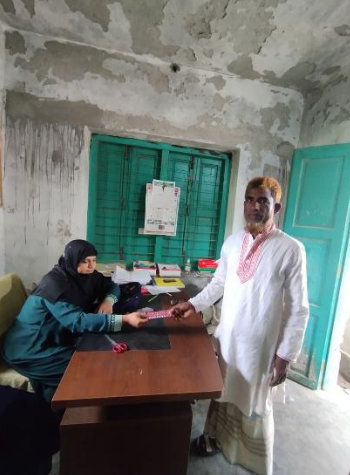
Before the camp, the project team engaged with the community letting people know that free, respectful and confidential healthcare was coming to their doorstep. That message reached Nur Nabi, a middle-aged daily wage laborer from the village. For a long time, Nur Nabi had noticed unusual skin patches but never sought care. “I always thought it was nothing serious. Going to the hospital means crossing the river and losing a day’s work. I couldn’t afford that.” said Nur Nabi.
Encouraged by the project staff, he decided for the first time to attend the skin camp. After examination by a trained medical doctor, Nur Nabi was diagnosed with Multibacillary (MB) leprosy. On the same day, he was registered under the National Leprosy Programme and he received free Multi-Drug Therapy (MDT). He was also enrolled in regular follow-up care.
Without early detection, MB leprosy carries a high risk of nerve damage if untreated and often leads to lifelong disabilities, loss of income, and social exclusion. When he learned what could have happened without treatment, Nur Nabi was shaken but deeply relieved. “I didn’t know this disease could take away my strength and my hands. I am thankful I was found before it was too late.” Within a few months of consistent treatment, his skin lesions reduced significantly, and he was able to continue working and supporting his family.
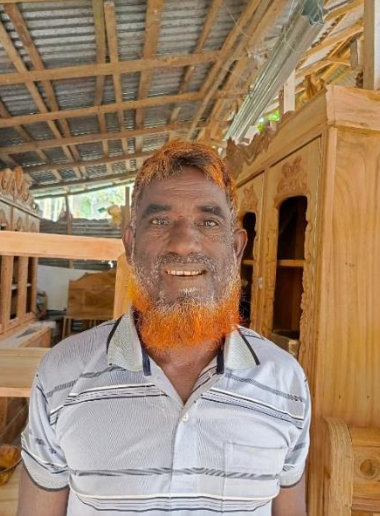
The same skin camp identified three additional leprosy cases and Nuri Nabi, with a newfound understanding of leprosy, is now encouraging others to seek care if they notice skin changes. “If the camp hadn’t come to our village, I wouldn’t know I had this disease. Now I’m getting better every day—and I don’t want anyone else to suffer like I almost did.” Through his encouragement, two additional suspected leprosy cases have already been referred for assessment.
Thank you to Bishops’ Appeal for your valued support which has helped to ensure that skin camps like the one that visited Nur Nabi’s village continue to take place. These skin camps are successfully overcoming geographical, financial, and behavioral barriers to bring healing and awareness of leprosy to communities in Bangladesh. Ultimately Christ’s love is being shone through these communities. Thank you! *Picture shows Nur Nabi smiling